
Dr. Joshua Talib, European Centre for Medium-Range Weather Forecasts (ECMWF)
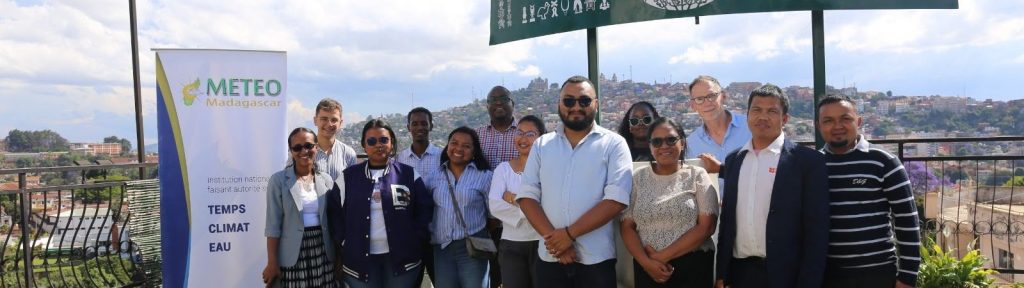
Last week, I had the privilege of co-leading a training course with Dr Piotr Wolski on downloading, post-processing and evaluating dynamical sub-seasonal forecast data.
During the course, I was asked: “Why is it challenging to create composites when two large-scale climate drivers are active at the same time, such as the Madden-Julian Oscillation (MJO) and El Niño-Southern Oscillation (ENSO)?”
To explain, I reached for my trusty, and admittedly rather old, scientific calculator. With a few quick calculations, I could demonstrate how rapidly the sample size decreases when we restrict an analysis to dates on which two particular large-scale drivers are simultaneously active. The reaction in the room was one of surprise, though perhaps not for the reason I expected. How could I still be carrying around a scientific calculator? Did I really still use it in my day-to-day work?
I do.
For me, the calculator was simply the easiest tool for the job. Within a few moments, it helped illustrate why the number of available dates can become so small that drawing statistically robust conclusions from a composite becomes challenging.
That reaction got me thinking. Do we sometimes respond to dynamical forecasting in the same way, particularly given the rapid rise of AI and machine-learning-based weather prediction?
Our training focused specifically on accessing and working with dynamical forecast data. Compared with rapidly evolving machine-learning prediction systems, dynamical models might occasionally seem like the “old” tool. But forecasting is not about using the newest tool simply because it is new. It is about understanding the strengths and limitations of the tools available to us, knowing when they are useful, and ensuring that forecasters have the skills and confidence to use them effectively.
Making sub-seasonal forecasts easier to use
Operational sub-seasonal forecast data are openly available through World Weather Research Programme/World Climate Research Programme (WWRP/WCRP) Sub-seasonal to Seasonal (S2S) Prediction Project databases, with data hosted by centres including European Centre for Medium-Range Weather Forecasts (ECMWF), China Meteorological Administration (CMA) and International Research Institute for Climate and Society (IRI).
Within ACACIA, collaboration across Work Packages 3, 4 and 5 has led to the development of the acacia-s2s-toolkit, a Python package designed to make it easier to download, post-process, generate products from, and evaluate the skill of sub-seasonal forecasts available through the ECMWF-hosted S2S database. For many months, I have worked alongside Dr. Piotr Wolski (Climate System Analysis Group, University of Cape Town; CSAG-UCT), Dr Kimberley Bartholomew (UK Met Office), Dr Innocent Masukwedza, and Associate Professor Linda Hirons (National Centre for Atmospheric Science, University of Reading; NCAS-Reading) to develop and refine the toolkit to a stage where it could be used effectively in this first dedicated training course.
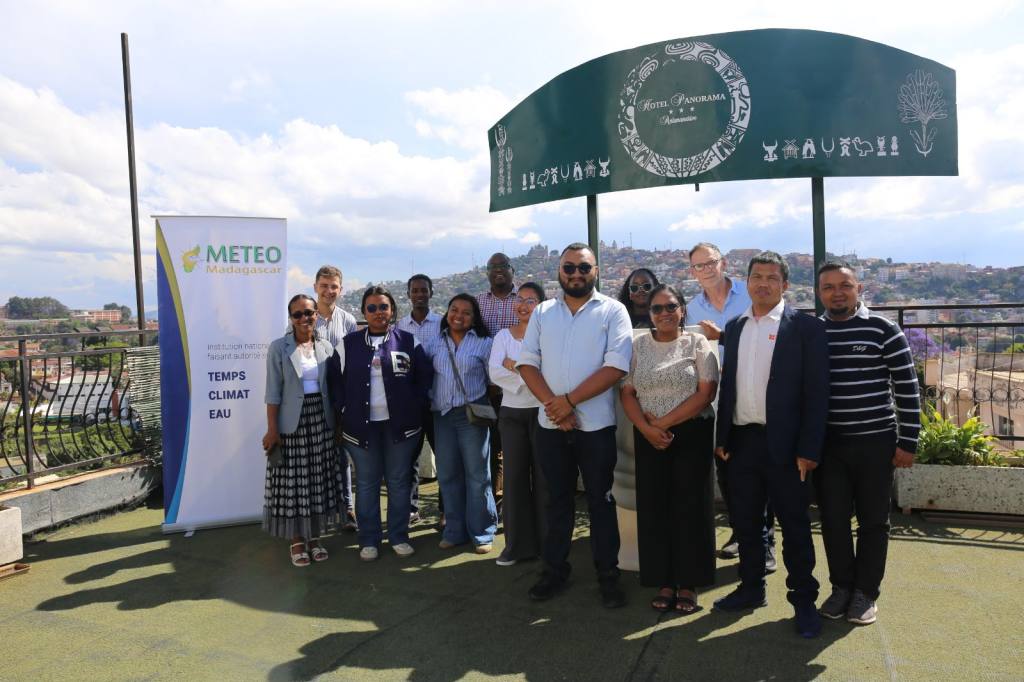
The toolkit is still evolving, but last week marked an important milestone: our first official training course using the acacia-s2s-toolkit, supporting ongoing collaboration with our African National Meteorological and Hydrological Service partners, Direction Générale de la Météorologie (DGM) in Madagascar and the Ethiopian Meteorological Institute (EMI), as well as meteorologists working with La Croix-Rouge Malagasy (Red Cross Madagascar) and World Meteorological Office (WMO), Nairobi office.
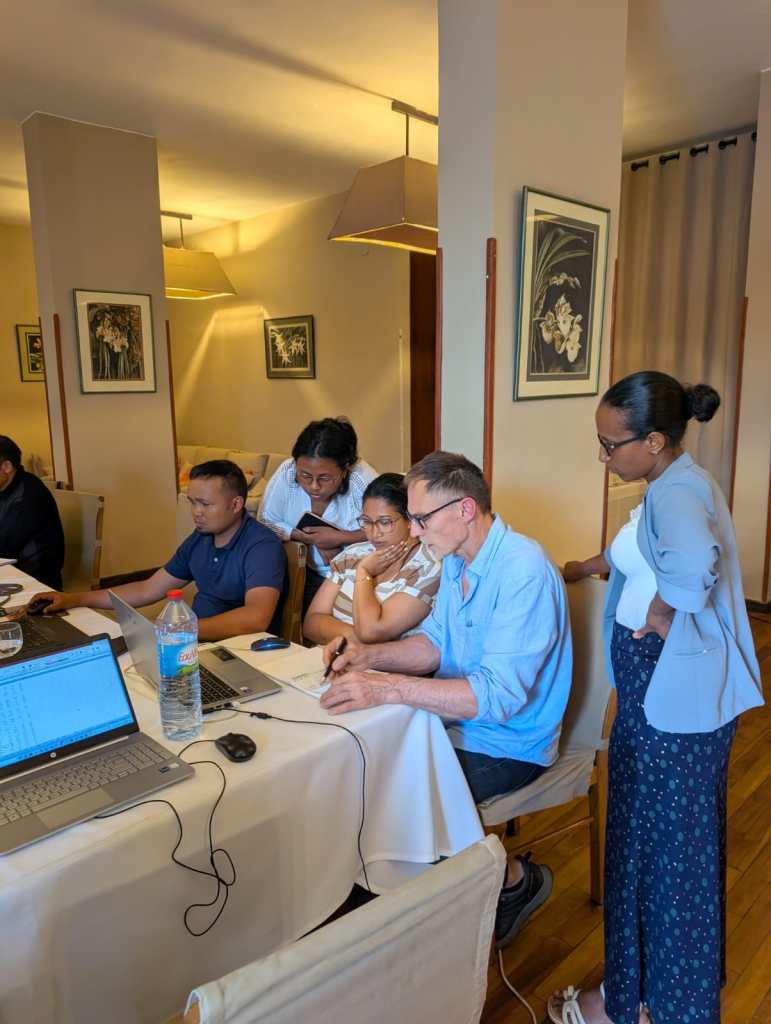
During the training, we were also delighted to welcome the Director of the WMO Regional Office for Africa, Dr. Agnes Kijazi, providing an opportunity to share the work being undertaken through ACACIA and discuss the importance of strengthening access to, and use of, sub-seasonal forecasts across Africa.
Giving users the freedom to explore
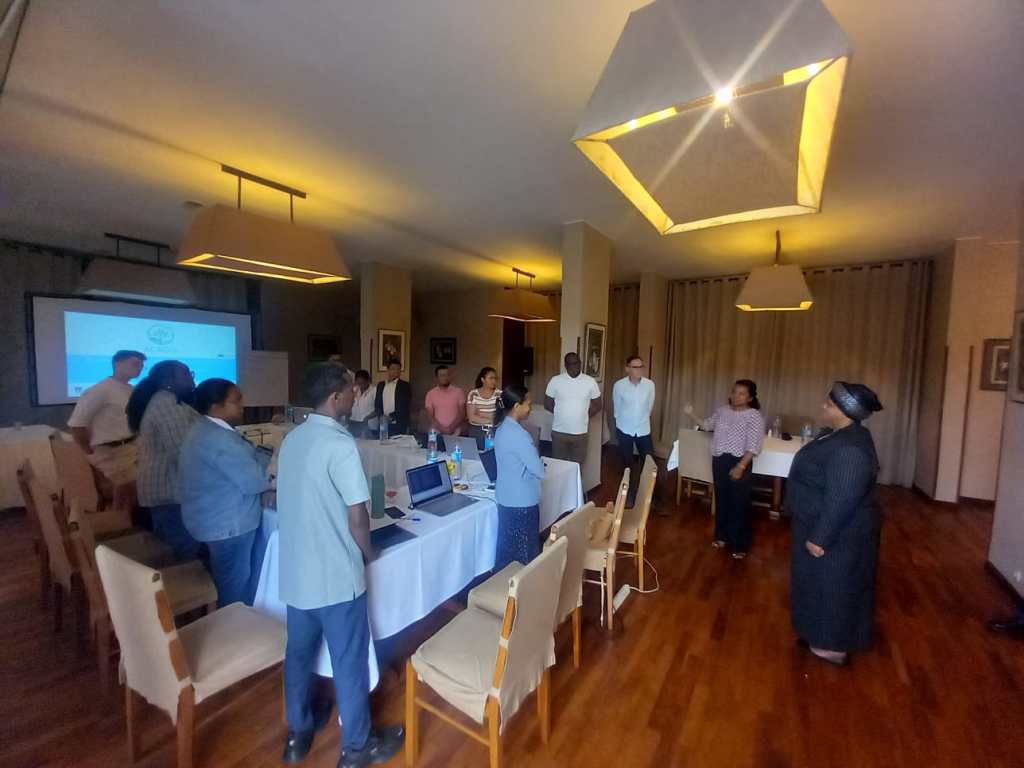
At the heart of the training was flexibility. Rather than prescribing a single forecast product, we wanted participants to explore what they could do with the toolkit and, importantly, what would be useful within their own operational contexts.
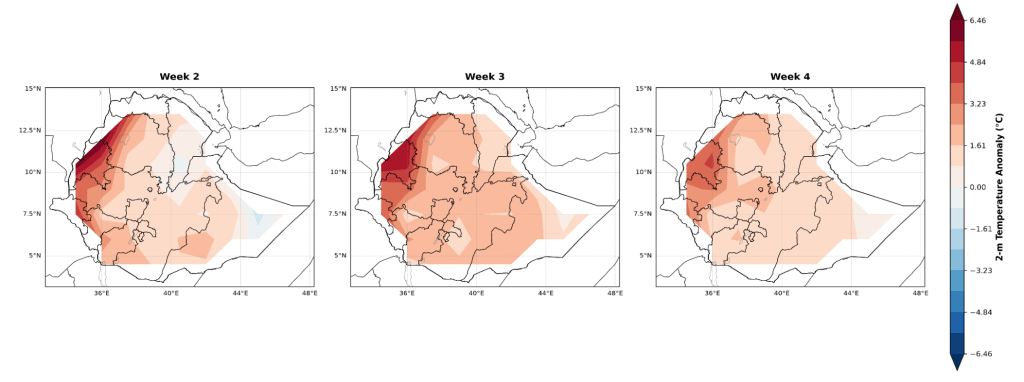
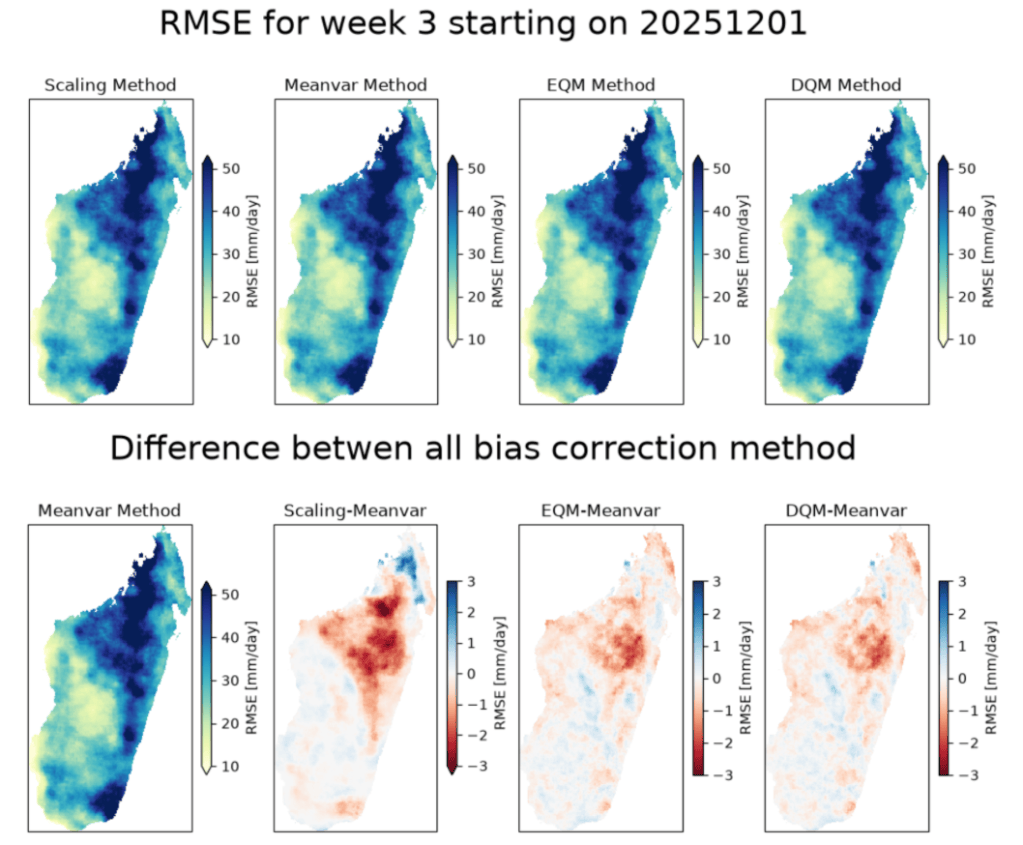
The course culminated in a three-hour discussion and presentation session in which each participant showcased what they had developed. The range of applications was fantastic. To name a few, we saw precipitation forecast products, bias-corrected temperature forecasts, investigations into how different bias-correction approaches affect rainfall forecasts, and forecasts exploring the likelihood of daily precipitation exceeding 50 mm.
This is one of the things I find most exciting about the acacia-s2s-toolkit. It gives agency to the user. In this case, operational meteorologists from Ethiopia and Madagascar were able not only to develop forecast products of their choosing, but also to assess the skill of the forecast metric behind those products.
The participant experiences shared below highlight that journey, from accessing the data through to post-processing, bias correction, product development and forecast evaluation.
Learning goes both ways
The course was equally valuable for those of us developing the toolkit. Seeing how participants approached the software, the questions they asked and the applications they chose to investigate provided important insight into how the Python package and its associated training materials can continue to develop.
For the wider ACACIA project, the goal goes beyond delivering a training course or developing a Python package. It is about enabling DGM and EMI to increasingly lead their own sub-seasonal forecast evaluation and product development, adapting the science and tools to the needs of their countries and users.
My experience last week reinforced something that is easy to overlook amid rapid advances in technology. Both NMHSs have talented scientists and operational meteorologists capable of tackling one of the biggest challenges in sub-seasonal forecasting: turning forecast data into information that is genuinely accessible and useful to people in Madagascar and Ethiopia.
And perhaps that brings me back to my scientific calculator.
AI and machine learning are opening exciting new possibilities for weather and climate prediction, just as new tools will continue to transform how we access, process and communicate forecast information. But newer does not automatically make older tools obsolete. Sometimes the best tool is simply the one that helps us understand the problem, test an idea and make a better decision.
And, in the age of AI, perhaps the most valuable “old” tool we have is still a great mind.
Participant testimonies
This training provides an opportunity to gain further technical knowledge and practical skills in developing the forecasting backend, from data downloading and processing to post-processing and product generation. It is also a valuable opportunity to meet with a work package lead to discuss, coordinate, and better define the work plans. Furthermore, the training allows us to learn new approaches and methodologies for evaluating and verification of forecasts.
Ferdinand RAFANOMEZANTSOA, DGM
Taking part in the ACACIA S2S training was a great opportunity for me as a staff member of the Malagasy National Society. It was my very first time working with sub-seasonal forecasts, and I learned a lot about both forecasting and post-processing methods.
What I learned will really help me in my work. It gave me a better understanding of how to access, visualize and evaluate the skills of sub-seasonal forecasts, useful in the development and updating of CRM EAPs triggers/threshold to gain more time to anticipate disasters. The toolkit provided motivates me to keep practicing.
It was a great experience and I hope I will have the chance to join more training and workshops with the ACACIA team in the future. Thank you so much !
Aina Bella RANDRIANARINAIVO, Croix-Rouge Malagasy (CRM)
As a sub-seasonal forecaster, this training has provided me with a great deal of new knowledge, particularly regarding the use of the ACACIA_s2s_toolkit in operational forecasting. It also helps us better respond to community needs, assess the feasibility of their requests, and evaluate forecast reliability in order to provide more relevant and useful weather information tailored to their needs.
Marius RAMANDIMBISOA, DGM
The training Hackathon was very interesting and useful for me. It helped me explore the various capabilities of the ACACIA S2S TOOLKIT (managing download and post-processed data, bias correction …) and understand how to use it for the forecast verification and to develop a good evaluation methodology. Continued technical support would be very helpful to improve my skills with this tool. So, many thanks to the trainers, Piotr and Josh, for their support !
ZOARIMAMY Henintsoa Onjaniaina, DGM
I really enjoy the acacia s2s forecast training workshop. It was very interesting and helpful , and I gained valuable knowledge and practical skills, from downloading to processing the data, its importance for applying the s2s ECMWF forecast operational work and the forecast evaluation. Thank you very much Piotr Wolski and Joshua Talib for your continued support and guidance.
Habtam Jenbaru, EMI
Everyone completed the training at their own rhythm, and we were able to personalise the content as we wished with the trainers’ support (standard precipitation forecasts, precipitation intensity, use of thresholds, choice of models and so on). It’s a good experience also to share with the EMI team and other colleagues from UCT and WMO. The new things I’ve learnt mainly focus on methodologies such as composite analysis with MJO or methods to make bias correction. Thank you
Harivao Joëlson, DGM
It is my first time attending ACACIA_s2s training workshop held@Madagascar/Antananrivio.
For giving early warning and alarming community living over the Awash Basin/Ethiopia to save themselves and property from flood flash, it is a key tool to be under evaluation/tested.
I understand about downloading model data, lead time, lags time for forecast and also i learnt the script about how to produce forecast , forecast verification and forecast BC.
Thank you Dr. Piotr Wolski and Joshua Talib for all your support and effort. Merci/thank you.
Abdisa Hirko, EMI
It was my first introduction to subseasonal forecasting and the acacia toolkit. What I enjoyed: the overall atmosphere of the training, which was nice and not stressful, also the content of the course and the fact that the toolkit is straightforward to use even for a newcomer like me.
What I learned: general use of the acacia toolkit to download forecasts, do bias correction and produce sub-seasonal forecasts and with their verification.
Farafehizoro Ramanjatonirina, DGM


Leave a Reply