
Francisco (Paco) Orozco-Meléndez, PhD Student, University of Bergen
Jesse Schrage, Researcher, NORCE
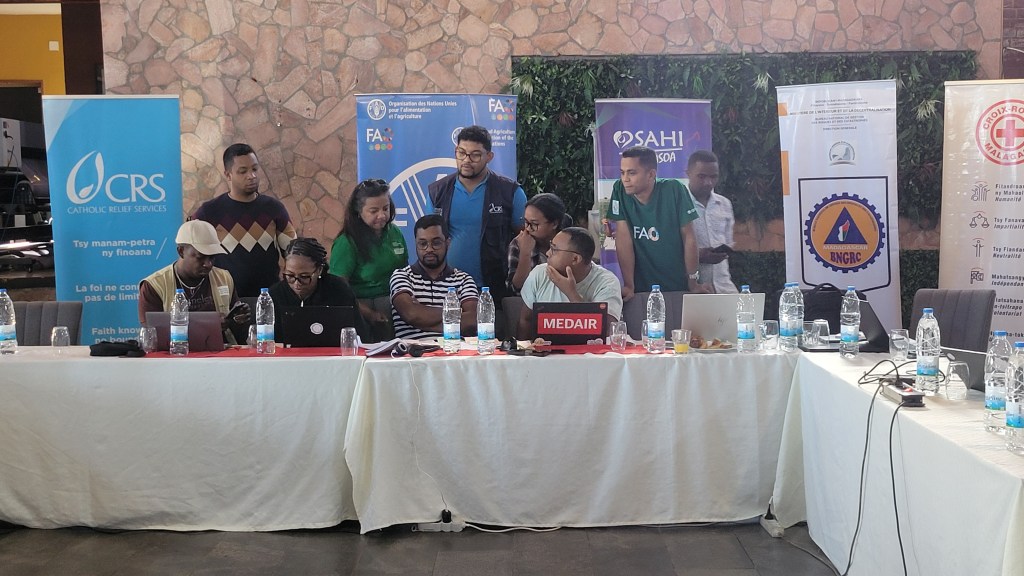
Twice a year, the ACACIA project gathers actors involved in anticipatory action into Extended Peer Communities (EPCs), both in Ethiopia and in Madagascar.
This year, we were able to organise the first round of EPCs in Madagascar, both with national stakeholders in the capital city of Antananarivo (abbreviated to Tana hereafter), and with local stakeholders in the region of Sofia.
What follows is a short reflection from Paco and Jesse on the role of EPCs in understanding climate risk management, and what came out of these meetings organised in April and May this year.
Paco: What is an extended peer community?
Preparing for climate hazards requires adequate knowledge to predict weather, calculate potential damages, define priority areas of intervention, and organise institutions. Yet “adequate knowledge” requires questioning: adequate for what? and what is adequate enough? Typically such adequacy or quality is assessed in communities of expert peers: Closed spaces where disciplinary specialists determine what findings, predictions, or models have enough quality according to the standards of their disciplines.
The goal of this system is to curate scientific production such as forecasts, maps, or models to inform decision making with reliable truths. This is known as “speaking truth to power”. What is the problem with such a model? Especially when it comes to something as critical as climate risk management, shouldn’t our decisions be based on the most reliable knowledge available? The main problem is, perhaps, that climate risk management is not (only) a technical issue. Even the most precise predictions fail to be translated into anticipatory actions because their quality responds to technical standards rather than social ones. Improving forecast skill by matching predictions with observed realities indicates technical adequacy, but are forecasts fit for social or institutional purposes? Certainly not always.
The alternative adopted by ACACIA is to extend the communities of peers. What is extended here is the possibility of enriching discussions about what forms of risk management are more plausible. We, as ACACIA scientists, don’t expect local communities to produce more skillful forecasts than what a powerful modeling team could do. Rather, we aim to understand in more heuristic terms what forms of anticipation are imagined, what decisions can be taken at what scales, and what role ACACIA can play in making them happen. In this way, extended peer communities aim to move the focus of quality assessment from technical skill to social and institutional relevance.
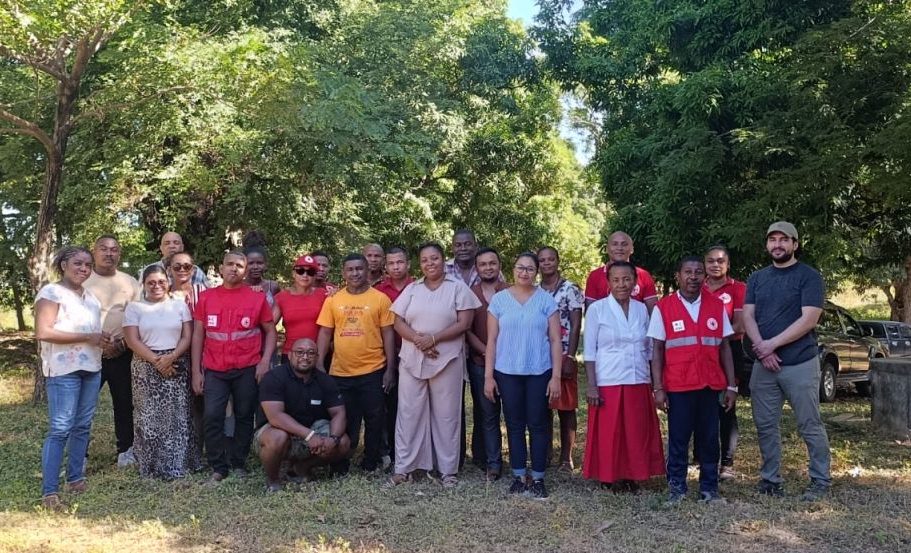
The EPC in the Sofia Region. Photo credits to Njaratiana IFANJAHARIMANANA
Working with the Malagasy Red Cross, the national meteorological services Météo Madagascar and colleagues at the university of Antananarivo, we set-up two EPCs where different people with different stakes in climate risk management openly discussed what it takes to achieve good preparation. This involved climate scientists, social scientists, public servants, but also volunteers and regular citizens who are affected first-hand by climate hazards. This diversity brought an extended set of facts, perspectives, and values that will allow ACACIA and local institutions for climate risk management to determine what good climate risk management looks like and what knowledge is needed to achieve it.
Jesse: Comparing the two EPCs
ACACIA brings together two EPCs in Madagascar: one in the capital city of Tana, the other in the northwest region of Sofia. While the former gathers key governance actors involved in anticipatory action (AA) in the country (NGOs, government officials, international organisations), the latter gathers actors involved in the operational dimension of anticipatory work. Both EPCs started with the question of “what would make ACACIA a worthwhile project?”.
In Tana, participants expressed their interest in focusing on institutional and technical frameworks, emphasizing for example the co-production of sub-seasonal bulletins, capacity building (for national meteorological technicians), and the creation of inclusive risk-governance frameworks that include humanitarian networks and policymakers. Conversely, the Sofia EPC brought a deeply practical, grounded lens to understanding AA work, defining the project’s relevance through the immediate needs of rural populations. Their priorities focused on equipping local support teams, translating warning messages into Malagasy dialects, and supporting farmers with concrete risk-mitigation efforts like reforestation and water retention.
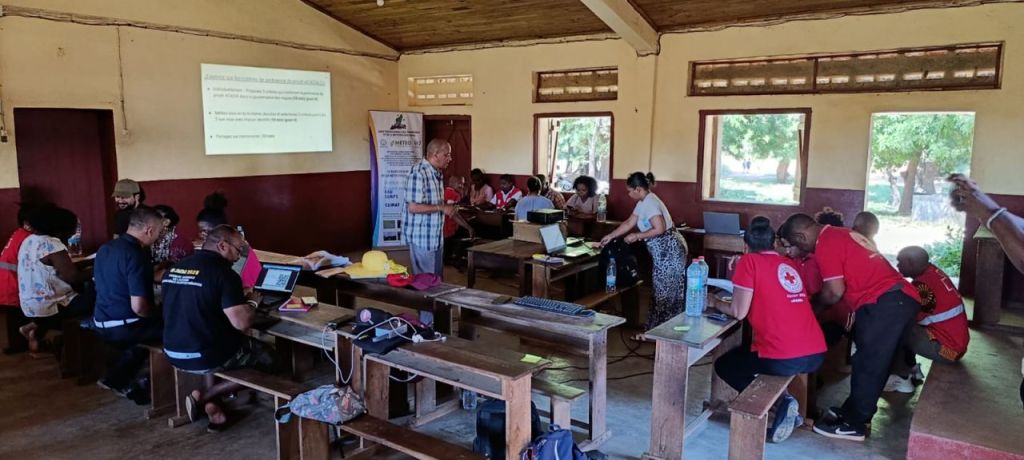
Engagement at the Sofia EPC. Photo credit Mahefasoa Randrianalijaona
In a second exercise, we facilitated a “timeline” exercise which encouraged participants to reconstruct the sequence of events before recent cyclones which affected the island, identifying what information was available, how different actors responded, and which barriers affected AA work.
Although both peer communities reflected on similar events, they revealed quite different aspects of AA governance. In Antananarivo, discussions centred on the institutional dimensions of preparedness, with participants highlighting challenges related to coordination between organisations, differing donor procedures, and the need for earlier and more precise weather forecasts. They also pointed to the importance of clearly distinguishing anticipatory action from emergency response, where the former is still a burgeoning approach in climate risk management, and therefore not well established yet in governance terms.
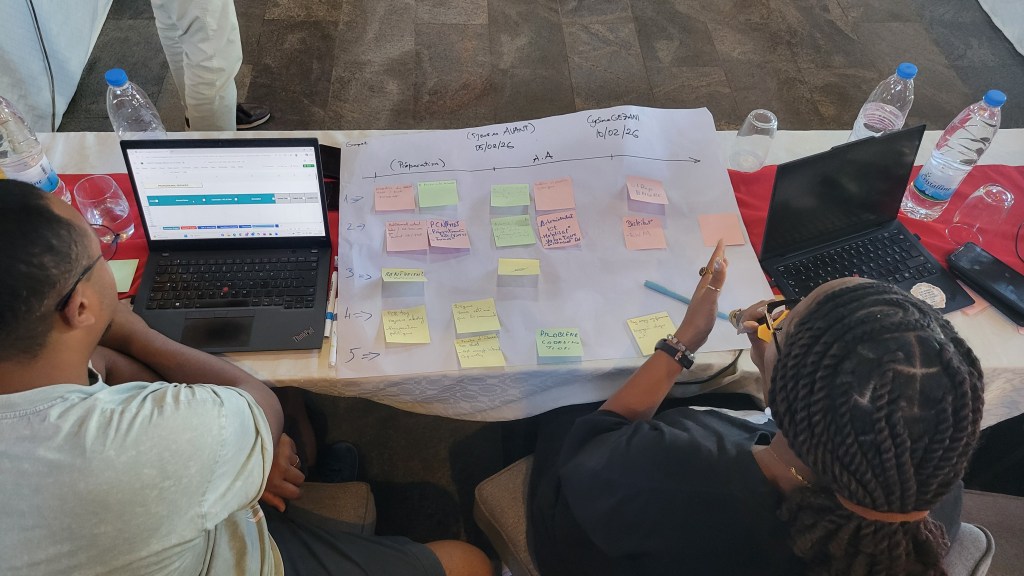
Building a timeline of events before a recent cyclone. Photo credit Mahefasoa Randrianalijaona
In contrast, participants in the Sofia region EPC focused on how preparedness unfolds within communities. They described concrete actions such as reinforcing homes, preparing shelters, monitoring weather forecasts, and stockpiling essential supplies, while also identifying practical barriers including limited understanding of weather bulletins, poor radio coverage, resource constraints, and reluctance to evacuate. Rather than emphasising institutional coordination, discussions were more concerned with the practical aspects of anticipatory action : they were centred on making climate information more accessible and actionable through simpler weather bulletins, local dialect translations, improved communication channels, and stronger support for local actors.
Together, the two meetings generated complementary insights: national stakeholders identified opportunities to strengthen the anticipatory action system, while stakeholders working at the local level highlighted how that system can be made more effective for the communities expected to act on early warnings.


Leave a Reply