
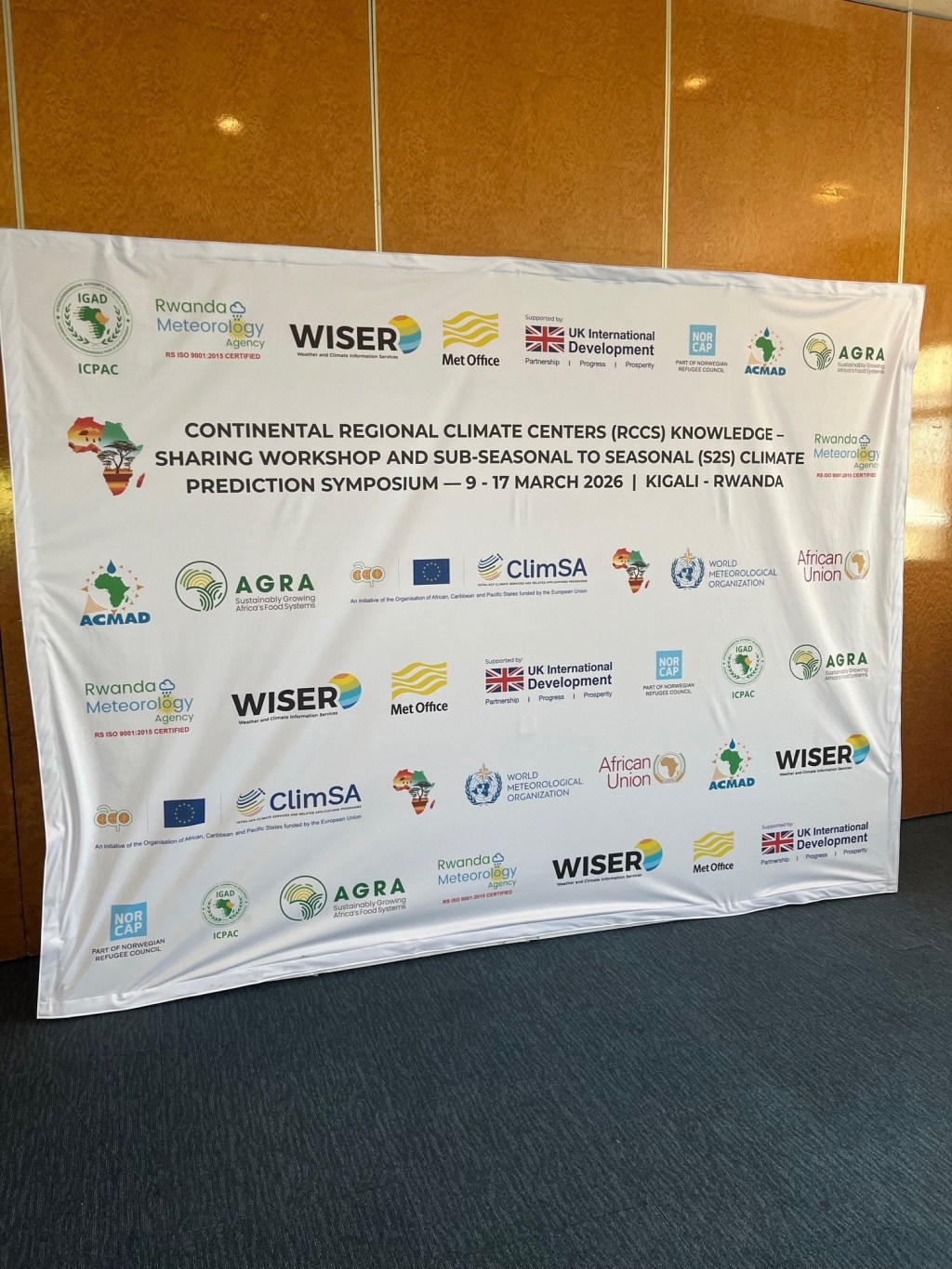
From 14–17 March 2026, ACMAD and ICPAC, supported by WISER PASS, convened a pan‑African symposium in Kigali, Rwanda, bringing together national meteorological and hydrological services (NMHSs), Regional Climate Centres (RCCs), universities and international partners. The symposium aimed to:
- Understand emerging sub-seasonal capability across NMHSs and RCCs
- Identify common challenges in operationalising sub-seasonal forecasts
- Build a roadmap to address these challenges and maintain collaboration
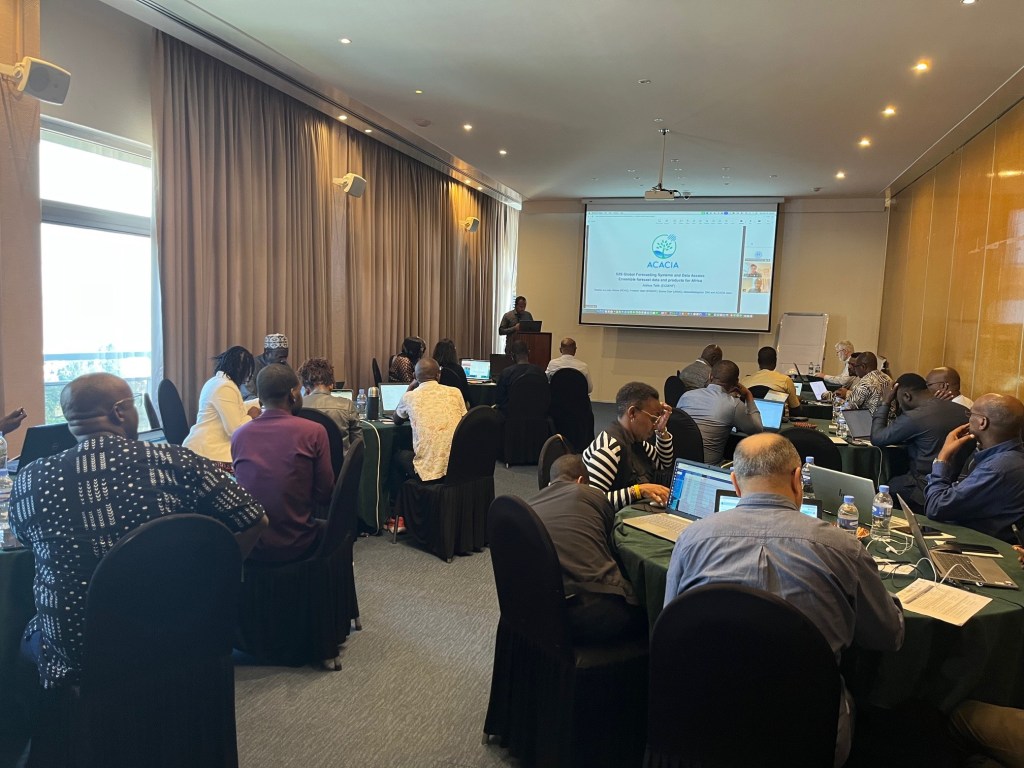
A continent‑wide exchange of experience
The symposium was framed around a shared challenge: how to turn emerging sub‑seasonal predictability into usable, sustained climate services.
Across three days, NMHSs from West, East, Central and Southern Africa, along with the respective RCCs, shared their current approaches, operational realities and ambitions. Contributions highlighted a wide range of practices — from early experimentation with weekly outlooks and dry‑spell indicators, to more established impact‑based products for heat, health and agriculture.
Despite the diversity in current approaches, common challenges quickly emerged:
- Data constraints including limited observational networks, lack of data sharing agreements, coarse resolution of freely available forecast and hindcast datasets
- Technical constraints including difficulty combining disparately formatted ensembles, lack of agreed verification metrics, and restricted computational capacity
- Communication challenges particularly around explaining uncertainty and probabilistic information
- Weak institutional coordination and lack of sustainability beyond projects with concern about maintaining tools, workflows and skills once short‑term funding ends
- Human capacity limitations especially in Python‑based workflows, forecast evaluation, impact‑based forecasting and AI/ML methods
Raw data access vs. existing tools
Joshua Talib (ECMWF), ACACIA WP3 lead, presented an overview of current global sub-seasonal forecasting systems and the various mechanisms available for receiving forecast data. He highlighted ongoing development of the acacia_s2s_toolkit, shaped through ACACIA-led testbeds and close engagement with African NHMSs, and its potential to enhance operational practices within African NHMSs and RCCs. Emma Dyer (UKMO), ACACIA WP5 co-lead, followed this session with a discussion of training needs and a live demonstration of the S2S toolkit.
Many of the training needs identified align closely with the developing ACACIA training plan, including technical training (Python, data access and manipulation, model evaluation), climate training (climate drivers specific to S2S timescales) and research skills (writing papers, reports and developing methodologies).
Hands‑on training by Simon Mason (SMHI) provided participants with practical experience in the use of the Climate Predictability Tool (CPT) tool to calibrate and tailor sub‑seasonal forecasts, reinforcing one of WISER PASS’s core principles: that sustainable climate services depend not just on access to data, but on local ownership of tools and methods.
Across these sessions, a clear tension emerged between efforts to promote open access to raw forecast data and the parallel need to build capacity in established tools such as CPT. Stronger collaboration between ACACIA and complementary initiatives, including WISER PASS, offers an opportunity to make better use of existing tools and avoid the development of parallel or diverging solutions. For example, the forthcoming CPT version 19 will enable the use of NetCDF files, meaning that outputs from the ACACIA S2S toolkit could provide an important data‑access pathway for users who wish to work within CPT while benefiting from a wider range of model inputs.
Looking ahead
A central focus of the symposium was coordination: between RCCs, between NMHSs and between research and operations. Discussions highlighted the need for:
- Improved data and tool accessibility, use and management
- Building technical capacity in terms of both infrastructure and methodologies
- Improving communication with users and forecast uptake
In particular, participants emphasised the desire for a continental data aggregation and sharing framework and the creation of a community of practice between the Regional Climate Centres to support harmonisation, coordination and sustained knowledge exchange on S2S forecasting.
The Kigali symposium made clear that sub‑seasonal forecasting in Africa is no longer a purely research activity. It is an emerging operational capability — one that offers significant opportunities for anticipatory action, but only if supported by coordination, sustained investment and user‑centred design.
This workshop marked an important step towards establishing shared direction and momentum. The challenge now is to translate the energy, insights and connections built in Kigali into concrete actions — strengthening sub‑seasonal forecasting as a practical pillar of climate services across Africa.

 ACACIA (Horizon Europe)
Leave a comment