

By Francisco Orozco-Meléndez; WP1 Researcher; PhD Candidate at the Center for the Study of the Sciences and the Humanities – University of Bergen
Transdisciplinary frameworks for knowledge co-production—on which ACACIA is inspired—bring together people from different social arenas to make climate knowledge actionable and fit for purpose to make timely decisions. However, people often relate differently to weather and climate, and therefore clash over visions about what good preparedness is. Is it possible to produce weather prediction technologies that fit the needs of people when those needs seem to go in opposite directions?
During this April, I had the opportunity to spend five weeks visiting Madagascar. The purpose of my trip was to improve our understanding of the institutional framework for Anticipatory Climate Action in the country. Our team wanted to understand what institutions are involved in the preparation and response to climate risks, how they collaborate, what their mandates are, what kind of information they currently use to make decisions, and what their knowledge needs are. Jesse Schrage already posted an intriguing reflection about it. Read Jesse’s post here.
Our first efforts to answer the questions above focused on the institutional framework that operates at the national level in Madagascar, but we still needed to understand what anticipation and risk management looked like in the most vulnerable villages to climate risks. We know that delivering government services, including risk preparedness, is always challenging, especially under Madagascar’s complex social and political conditions. Therefore, we wanted to understand how risk preparedness and response are delivered in the Sofia region and how communities live with weather risks. We were interested in those practices that do not need to be regulated by government institutions, but that might be of huge importance in preventing the impacts of climate hazards.
After spending 10 days in Antananarivo with Jesse, I embarked on a trip across Sofia. I visited different districts like Mampikony, Port-Bergé, and Antsohihy; There, I met wonderful people from whom I learned about living with cyclones.
Climate Risks Management: Institutional Uses of Climate Information
Influenced by international trends in risk management, government institutions and NGOs in Madagascar have been slowly moving towards frameworks for Anticipatory Action. This defines protocols for acting before a cyclone or storm hits land instead of responding only after a disaster has already happened. This framework comes with a huge promise for life-saving potential. However, coordinating protocols across institutions to release Anticipatory Action’s full potential has been challenging. And this, Jesse tells us in his blog post, isn’t just a matter of improving the science behind the triggers or communicating alerts with more time. Instead, those challenges are deeply rooted in the institutional cultures that govern risk preparedness.
How climate science and weather prediction technologies are produced, communicated, and used is just one piece in that puzzle of institutional cultures. Government institutions and NGOs use climate information to organize their activities, budgets, and resources. They can decide when and where it is necessary to distribute nutrition and sanitization kits or even make cash transfers to families affected by weather disasters. Inside their offices, weather predictions allow some institutional organization, and “good” weather predictions allow institutions to fulfill their internal goals.
How does that relate to what weather predictions are for people Living with Cyclones?
Community preparedness: Climate Risk Management or Living with Cyclones
In contrast with formal institutions, community preparedness is emergent, decentralized, and lacks clearly defined roles. Yet, communities in Sofia are always ready for the strike of a cyclone. They know that, sooner or later, one, two, or three storms will come every year. Each Fokontany normally has associations of elders, women, farmers, fishermen, and even kids. Their duties vary across Fokontanies, but they clean the water drainage systems before a storm or text their neighboring communities to ensure they know about impending cyclones (Figure 1).
We could always discuss whether these practices are effective through the lens of climate risk management, and we could find dozens of areas for opportunity. The very rationale of transdisciplinary knowledge co-production lies in the cross-pollination of systems of practice. However, risk management, the framework arguably based on scientific knowledge about climate and the governance of its risks, and living with cyclones, the emerging practices from trans-generational lived experience, aren’t entirely the same thing. Is it ethical, fair, useful, or even feasible to evaluate the effectiveness of one using standards from the other?
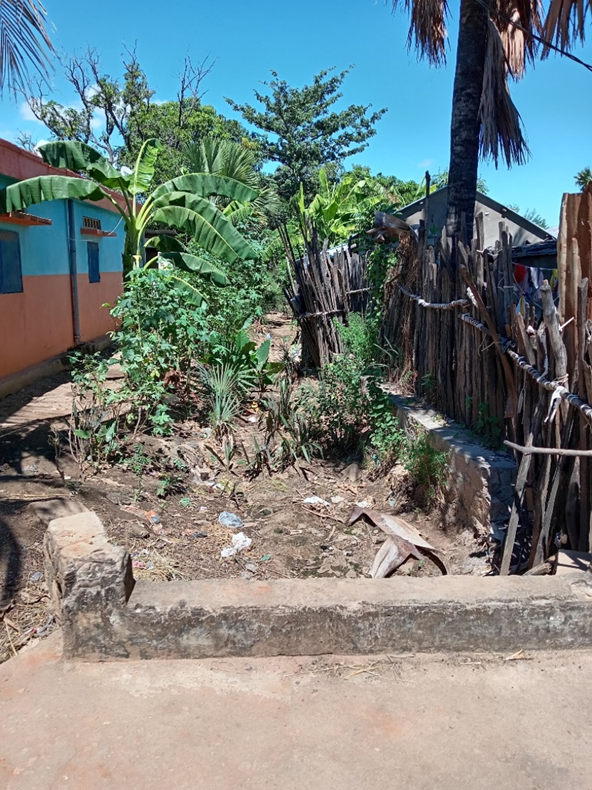
Figure 1. Water drainage in Mampikony after the cyclone season
While through Climate Risk Management it is easy to classify a cyclone as a potential disaster, such a label is much more problematic through the experience of living with cyclones. This year, a flood might bring sediments to someone’s rice field, making it unusable; next year, another flood will come and hopefully remove the sand from their field. The rivers that flood communities in Sofia every year are also the rivers where they take showers, do laundry, and play with their kids. They are where communities become what they are (Figure 2).
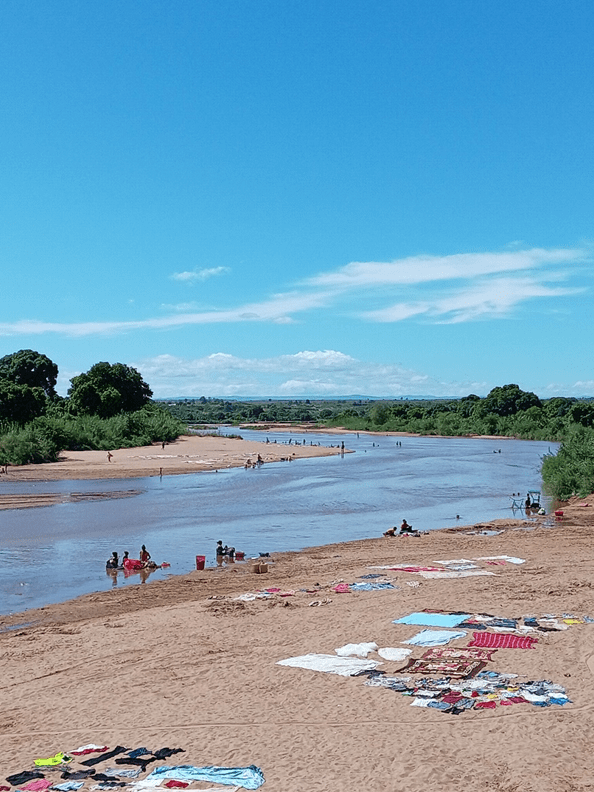
Figure 2. Sunday morning living with the Mampikony river, the same one that floods neighboring communities every year.
This has important implications for the design and function of climate services. For government institutions and NGOs, good climate services enable their coordination; for communities in Sofia, good climate services allow their emergent and diffuse organization. But sometimes, Climate Risk Management and Living with Cyclones clash over ideals of good preparedness. Climate Risk Management establishes a product chain to communicate risks from global to local institutions to make decisions at the most local scale possible. The regulatory ideal is to produce information at the finest temporal and spatial scales and communicate it as fast as possible to local authorities so they can act upon it. What actions align with this framework for Risk Management? For instance, temporary relocations to shelters or uphill villages. The ideal case scenario for Risk Management is producing technologies that allow people to decide, well in advance, to move to a safer location if needed.
However, the ideals of risk and preparedness look very different under the “Living with Cyclones” framework. An inhabitant of Antanambao, a rural Fokontany in the district of Mampikony, told me something that felt like a bucket of cold water: “I would never leave my house if I didn’t have water under my feet”. Just imagine my face after spending months thinking about how communicating weather information with more time in advance would help at-risk communities prepare better. Why would someone decide to stay home when told weeks in advance about the possibility of a cyclone coming? The answer might be in the difference between climate risk management and living with cyclones.
It is worth saying that the fact that communities in Sofia have lived with cyclones since always doesn’t mean that they are not afraid of them, that they don’t care about losing everything they have, or even risking their lives. They do, but this is also part of living with cyclones. We can say that living with cyclones evokes a set of values, resources, and even worldviews that can’t be fully understood only through the lenses of risk management.
Divergence and integration
Current trends in both research and practice of climate risk management call for more integration, coordination, and homogeneity. This is made evident through the increased efforts to connect global and local institutions. For instance, coordinating their mandates to cover all risk preparedness and response aspects without overlapping, aligning their goals, or agreeing upon triggers to act. As I already expressed, such coordination promises to improve climate risk management. This promise holds very high stakes and therefore shouldn’t be dismissed.
Still, sometimes integration is achieved at the expense of divergence. In Sofia, for instance, people’s rationale to remain at home even when everything suggests that moving to other villages or shelters is safer is usually qualified as irrational. Such irrationality is combated with police interventions to relocate vulnerable communities, which literally impose risk management over living with cyclones.
Bringing the role of academic research to this dilemma, the challenge for transdisciplinary research is finding out how to engage in co-creation without forcing Living with Cyclones to fit into Climate Risk Management.

 ACACIA (Horizon Europe)
Leave a comment