

The Acacia project is all about making climate information easier to access, understand, and use—while also improving its accuracy. One of our main focus areas is Madagascar, where we kicked things off with a field mission in November. Right now, we’re running a forecast testbed there—a hands-on collaboration where climate researchers, forecasters, and practitioners come together to better understand cyclone forecasts, how they’re shared, and what information people actually need.
As luck would have it, Madagascar also hosted the 30th Southern African Regional Climate Outlook Forum (SARCOF) from January 28-30, 2025. SARCOF is where forecasters from national meteorological services across the 16 SADC countries meet with regional stakeholders to discuss seasonal climate forecasts and develop advisories for key sectors like agriculture, water, energy, health, and disaster risk reduction.
This was a perfect opportunity to introduce Acacia’s work to regional and Malagasy stakeholders, practitioners, and forecasting experts. It also allowed us to strengthen our partnership with Meteo Madagascar, who hosted the event. On top of that, we conducted a survey to better understand the capacity-building needs for sub-seasonal forecasting in the region’s national meteorological services.

Piotr presenting Acacia to SARCOF forum participants
Personally, this trip felt like a homecoming. My work with Acacia builds on my previous project, ClimSA, where I collaborated with SADC CSC to update forecast methodologies used in SARCOF. Heading back to Madagascar gave me a chance to reconnect with the incredible SADC NMHS forecasters and CSC staff—and to see firsthand how the work we did in ClimSA is still making an impact. And let me tell you, it did not disappoint.
Now, I could go on for ages about ClimSA, but I’ll save that for another time. Instead, I want to highlight a couple of key takeaways from SARCOF 30 that are especially relevant for Acacia.
One major lesson from ClimSA was that transitioning to modern forecasting methods doesn’t mean throwing out the old ways entirely. When we set out to move SARCOF toward a more objective approach, we didn’t just ditch the traditional consensus method in favor of an automated, model-driven process. Instead, we found a balance: integrating statistical and dynamical models while ensuring forecasts are evaluated in a structured, transparent way, based on demonstrated skill. More importantly, we kept forecasters at the heart of the process, valuing their expertise in interpreting models, understanding country-specific needs, and maintaining ownership of the tools and methods. The result? A more effective approach that continues to be used beyond ClimSA’s official timeline.
Another key takeaway is the importance of building strong and lasting relationships between forecasters and stakeholders. Effective climate services rely on trust, shared understanding, and a sense of joint ownership. But this doesn’t happen overnight. It takes sustained effort, continuous engagement, and—ideally—dedicated funding to support co-production activities and ongoing capacity development. While ClimSA made great strides in improving SARCOF’s role as a bridge between forecast producers and users, there’s still room to grow before it becomes the truly inclusive and impactful platform it has the potential to be.
That said, SARCOF 30 was a fantastic experience—beautifully organized, full of great conversations, and set against the vibrant backdrop of Tana. I’m incredibly grateful to Meteo Madagascar, especially the Director Dr. Luc Randriamarolaza, and my Acacia colleagues Anzela, and Zo, for the warm welcome, as well as my colleagues from CSC and NMHSs who made me feel like part of their community once again. I can’t wait to continue working together to create climate forecasts that are not only useful but actually used—helping forecasters and practitioners tackle the challenges that climate and weather throw our way. That’s exactly what Acacia is here for.
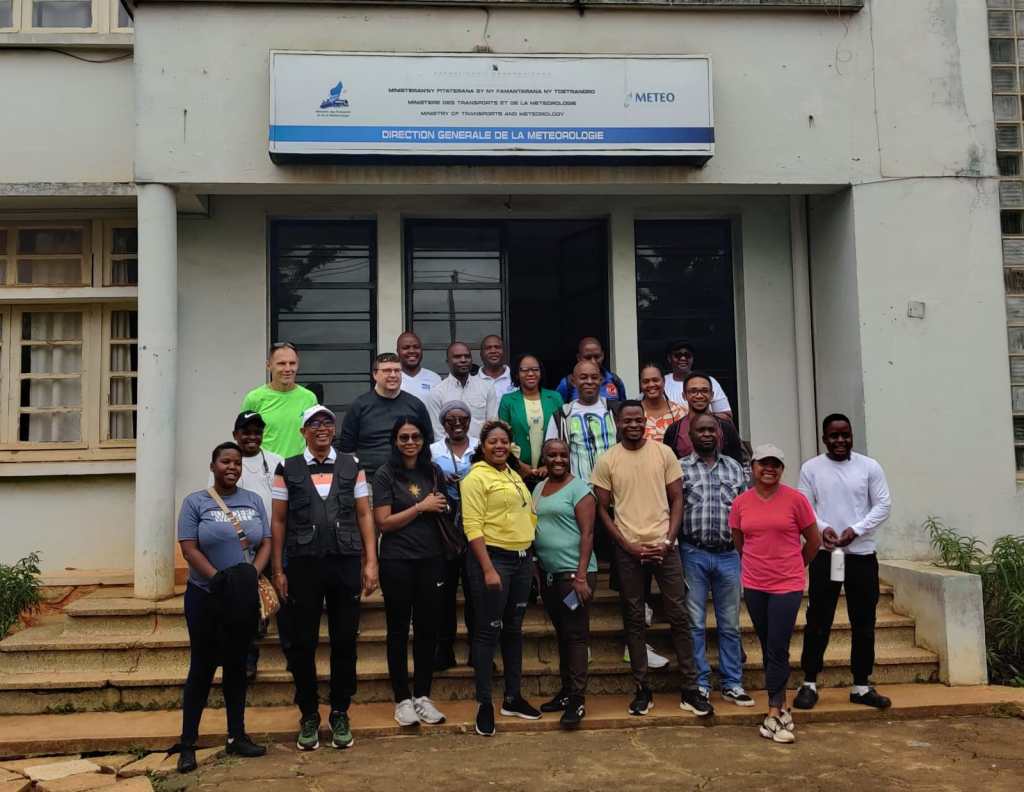
NMHS forecasters at the Meteo Madagascar headquarters in Tana

 ACACIA (Horizon Europe)
Leave a comment